Provisional Measures at the Crossroads: Enforceability, Plausibility, and the ICJ's Evolving Role
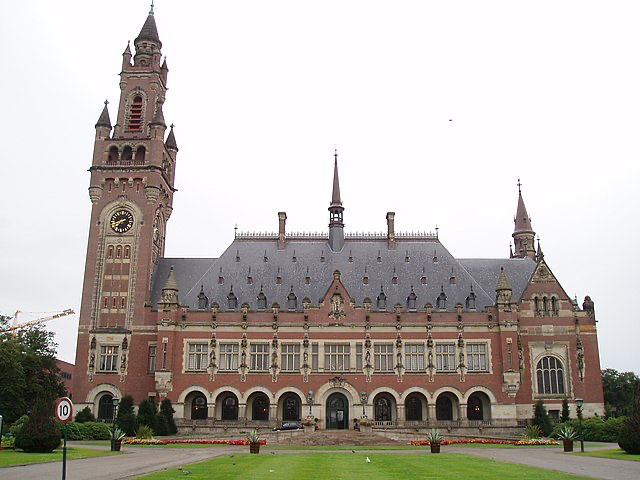
By: Madison Finley Beamguard
Madison Finley Beamguard is a J.D. candidate at Columbia Law School, where she serves as Public Affairs Editor of the Columbia Journal of Transnational Law and is a research assistant to Professors Anu Bradford and Monica Hakimi. She previously served as a legal extern to UN Special Rapporteur Elizabeth Salmón and was a Summer Associate at Freshfields. Her work focuses on public international law, sanctions, and accountability mechanisms.
Part 1: Provisional Measures at the Breaking Point: The ICJ’s Expanding Docket and Its Critics
The ICJ’s South Africa v. Israel case sparked numerous conversations and debates on international law. Not least among these are questions about the Court’s process and substance underlying its power to indicate provisional measures.[1] When the Court ordered Israel to “take all measures within its power,”[2] observers responded with questions: What actions, administrative or military, were required; and to what extent was Israel required to act?[3] This ambiguity was not merely incidental—it reflected the tension in a Court increasingly called upon to intervene in active, ongoing, and multifaceted crises in which facts are disputed and the evidentiary record is incomplete.[4] South Africa v. Israel exemplifies this complexity: It required the Court to assess genocide allegations during an active armed conflict, where analysis necessitated an established factual record not readily available at early stages of the dispute.
The doctrine of provisional measures evolved through three distinct phases across the PCIJ, the early years of the Court, and the present period. During the PCIJ’s tenure, it indicated provisional measures in only two of the six requests, exercising “broad judicial discretion” and taking an expansive view of its statute. At the inception of the ICJ, the Court established a two-pronged test for provisional measures orders in the Anglo-Iranian Oil Company case:[5] prima facie jurisdiction, requiring the respondent to demonstrate a manifest lack of jurisdiction, and the risk of irreparable harm to the objects underlying the parties’ claimed rights. The ICJ applied this standard until a pivotal shift in 2001, when, for the first time, the ICJ held in the LaGrand judgment that provisional measures orders are binding.[6] In hindsight, this was not out of step with developments in international law and at the ICJ. Following an era of decolonization and the emergence of new States, the cases before the Court reflected States’ desire to adjudicate questions of statehood and sovereignty.[7] But beginning in the 1990s, the focus of international law and the Court shifted from such questions foundational to the creation and maintenance of States to the treatment by States of their populations and adherence to human rights obligations and treaties.[8] In this context, formalizing the authority of provisional measures is unsurprising, as it ensures accountability for states’ international legal obligations owed to their peoples. Two earlier cases, Legality of the Use of Force[9] and Armed Activities on the Territory of the Congo,[10] heralded this change.[11] Both disputes involved complex political questions, prompting the Court to examine prima facie jurisdiction more closely in its orders and judgments. The increasingly complex legal disputes, along with their intertwined political ramifications, are likely drivers of the Court’s new, stricter approach.[12]
In the two decades that followed the LaGrand judgment, the Court refined its provisional measures standard, tightening it in light of the orders’ new implications. In Georgia v. Russian Federation in 2008, the Court applied a stricter prima facie jurisdiction test: The applicant State must provide a basis for jurisdiction—a rebuttable presumption of jurisdiction was no longer sufficient.[13] Then, in the landmark Belgium v. Senegal case before the Court in 2009, the ICJ developed the plausibility doctrine, requiring the Court to satisfy itself that the rights asserted by the party are plausible.[14] The plausibility doctrine, as articulated in Belgium v. Senegal, set a low threshold, requiring only that the rights claimed are possible under the treaty at issue.[15] However, since 2016, the Court has gradually increased the requirements to demonstrate plausibility: For the first time, in Immunities and Criminal Proceedings, “the Court also made findings of fact” in assessing plausibility.[16] In its orders proceedings, it began reviewing the factual evidence, the legal basis, and the claimed defenses with more rigor.[17] The resulting plausibility doctrine requires the Court to assess whether the rights are likely to be violated.[18] The Court’s jurisprudence reflects its uncertainty regarding plausibility, with the issue coming to a head in Ukraine v. Russian Federation (2022), when the Court found provisional measures plausible, only to later find, at the merits stage, that it lacked jurisdiction over two of Ukraine's core claims.
Against this background, three key criticisms arise: first, challenges to provisional measures’ lack of enforceability and compliance; second, procedural inconsistency; and third, sovereignty asymmetry.
Enforceability and Compliance
First, scholars have noted that since LaGrand, States have complied with orders approximately 50 percent of the time, and that rate is only declining.[19] While the Court has historically addressed past harms, more often, disputes before the ICJ are ongoing, highly contentious, and political.[20] The ICJ has undergone a shift in its role, having employed provisional measures in some of the most significant recent conflicts, including Ukraine v. Russian Federation and South Africa v. Israel, reflecting the ICJ’s willingness to respond to ongoing political and humanitarian crises. Furthermore, the UN Security Council’s paralysis has driven states to seek answers and resolutions from the ICJ, and 15 of the recent 26 provisional measures can be attributed to the Council’s paralysis or lack of interest.[21] States increasingly use the Court as a political instrument, as South Africa did when it invoked the Court’s jurisdiction against Israel, an evolution with both supporters and dissenters.[22] However, States’ use of the ICJ as a political agora rather than a forum for dispute resolution risks eroding confidence in the judicial process. This also raises concerns about whether the ICJ exceeds its authority, which instead belongs to the Security Council.[23] Further, the Court lacks enforcement power and may report non-compliance to the Security Council, a rarely used mechanism.[24]
Inconsistent Application
Second, the ICJ’s current provisional measures framework requires it to assess prima facie jurisdiction, a link between the measures and the rights claimed, plausibility, risk of irreparable harm, and urgency—yet it has applied this test inconsistently in recent cases.[25] In three recent cases, for example, the Court declined to grant provisional measures and discussed only a few of the factors: In Equatorial Guinea v. France, it considered only “plausibility,” and in Nicaragua v. Germany and Mexico v. Ecuador, it considered only “risk” and “urgency.”[26] This approach frustrates the ICJ’s legal mandate because, first, provisional measures orders lack res judicata effect; it is not unlikely that the Court may be asked to reevaluate its orders, creating challenges when it has not conducted a complete analysis. Second, given the binding nature of the measures, each component of the provisional measures framework serves a specific function to ensure that the Court takes due consideration; a “pick and choose” approach undermines that framework.[27] Third, this method may prompt States to question the Court’s reasoning because it often fails to provide a thorough explanation of its rulings, especially in heated disputes.[28]
Sovereignty Disparity
Finally, provisional measures exacerbate tensions with State sovereignty and consent to ICJ proceedings. States consent to be bound by a final judgment rendered after the parties’ complete evidentiary submissions and hearing.[29] An order for provisional measures, however, is issued only after a limited review—a one-day hearing. In the Nuclear Tests case, Judge Singh wrote that the urgency confers on the Court the authority to grant provisional measures.[30] This grant of authority to issue a non-final order, thereby abridging State sovereignty, is exceptional, and the Court should act in this way only when it is certain that the situation is sufficiently urgent. The ICJ has not yet established a clear understanding of what constitutes urgency, and without a clear evidentiary standard, the parties cannot know the threshold they must meet.[31] This raises concerns of fairness and due process: The parties lack a clear evidentiary burden, and the procedure’s rapid pace impedes the complete gathering of evidence and the development of legal analysis.
Furthermore, the ICJ is not immune to the challenges confronting the international legal system. Challenges to the Court’s legitimacy stem from issues within the Court itself; however, procedural inconsistency, the unresolved plausibility standard, and the failure to appreciate sovereignty tensions are problems not without solutions. How the Court proceeds will reflect whether it remains a stalwart international legal body or becomes another forum for states to air grievances.
Part II of this article will review other international courts and tribunals that have grappled with similar challenges and responded in different ways. This analysis reveals feasible paths forward for the ICJ.
Part II: Three Reforms for the ICJ’s Provisional Measures Regime: Lessons from ITLOS and Human Rights Courts
Part One of the ICJ’s provisional measures analysis identified three critical issues with the Court’s current framework: declining compliance with mandatory measures, inconsistent application of the five-factor test, and a failure to resolve the tension between sovereignty and urgency. In light of recent provisional measures orders in Ukraine v. Russian Federation and South Africa v. Israel, where the Court’s inconsistent positions and vague analysis left uncertainty in its wake, these issues are particularly important. Yet these problems do not require complicated political maneuvering; rather, they require judges to make feasible procedural choices. The International Tribunal for the Law of the Sea (ITLOS) and regional human rights courts (the European Court of Human Rights (ECtHR) and the Inter-American Court of Human Rights (IACtHR)) have demonstrated the ability to adopt mandatory reporting, a defined plausibility test, and engage the sovereignty question. These mechanisms, selected for their subject matter and membership diversity, demonstrate different approaches to reforming the provisional measures framework without compromising legitimacy.
Mandatory Reporting
In 2020, the ICJ established a new three-judge ad hoc committee to monitor the implementation of provisional measures and to report periodically to the Court to determine whether additional measures are warranted.[32] However, reviewing the other courts’ practices reveals enhancements to this relatively new system. First, ITLOS requires mandatory reporting on the progress of compliance with procedural measures.[33] The Tribunal is empowered to require additional follow-up measures as necessary,[34] as it did in the 2001 MOX Plant case between Ireland and the United Kingdom.[35] ITLOS ordered provisional measures requiring monitoring of the disputed marine environment and established a panel of experts to evaluate the parties’ submissions, thereby increasing collaboration and facilitating the execution of the provisional measures.[36]
Of the human rights courts discussed here, the ECtHR does not require mandatory reporting, but it monitors states for compliance with its binding provisional measures.[37] The IACtHR, however, takes an active approach to monitoring compliance with provisional measures, requiring periodic hearings on the parties’ compliance with the orders.[38] States are mandated to report within a Court-established timeframe, and the IACtHR continues to monitor the proceedings throughout. The Court may also adjust the provisional measures ordered in light of compliance or non-compliance.[39] For example, in cases regarding the treatment of prisoners, provisional measures have sought to ensure humane treatment, “suspend[ing] death penalty orders, improv[ing] the prison conditions of the detainees and offer[ing] ill prisoners adequate medical treatment….”[40] While measuring compliance in these cases is complex, these orders have often resulted in better conditions for incarcerated individuals.[41]
Building on the ICJ’s 2020 monitoring reform, additional enhancements can be informed by the procedures of other dispute settlement regimes. These include ITLOS’s mandatory reporting regime and IACtHR’s regular compliance hearings. The ICJ could require mandatory reporting to the ad hoc monitoring body, with automatic UNGA supervision and escalatory pathways to the UNSC beyond the UN Charter. Requiring publicly available reporting is consistent with past ICJ practice in The Gambia v. Myanmar, where, in its 2020 order of provisional measures, the Court ordered Myanmar to submit reports every six months, giving The Gambia an opportunity to comment on them.[42] Enhanced monitoring with an established escalation framework may address some concerns about enforcement and compliance, but such a procedure would entail additional costs and resource allocation, which the Court must weigh. States may view these measures as encroaching on sovereignty and be less likely to consent to the Court’s jurisdiction. However, this concern could be mitigated by adopting a practice similar to that of the IACtHR, which establishes mechanisms to support the State during implementation,[43] thereby reducing ambiguity and encouraging States to contribute to the development of the implementation plan.
Plausibility
The ICJ's plausibility doctrine, requiring that claimed rights be plausible before provisional measures are granted, remains its most contested and inconsistently applied standard, with disagreement among judges as to what it requires. ITLOS’s approach to determining provisional measures hinges on plausibility. Unlike the ICJ’s amorphous plausibility doctrine, however, ITLOS adopts a lighter (i.e., lower evidentiary burden) and less stringent approach to plausibility, requiring that the rights be “at least plausible.”[44] By doing so, ITLOS seeks to keep the decision on provisional measures distinct from the merits, thereby preventing the indistinct overlap that sometimes occurs in the ICJ’s proceedings.[45] However, ITLOS’s indications of provisional measures are based on UNCLOS, a much narrower body of law than that which the ICJ must consider.
In 2023, the ECtHR revised its test for provisional measures, resulting in a stricter standard.[46] The new standard requires “exceptional circumstances” and an “imminent risk of irreparable harm” to a guaranteed right.[47] The standard focuses solely on the urgency requirement, treating provisional measures as truly exceptional, i.e., irreversible, in cases such as deportation or executions, rather than in property or insolvency claims. As a result, more than 50 percent of provisional measure requests were rejected in 2024, compared with approximately 20 percent in 2023.[48]
Although it adopts a similar standard, the IACtHR orders provisional measures much more broadly than the ECtHR. Its standard is less stringent, requiring only that the situation be of “extreme gravity and urgency” to avoid “irreparable damage.”[49] Provisional measures may be requested directly from the Inter-American Commission on Human Rights before the case is filed with the IACtHR and may be granted to protect structural and systemic issues affecting individuals’ rights, not merely States’ interests.[50] The IACtHR’s dynamic monitoring procedure enables it to quickly and frequently adapt provisional measures as needed.
The ICJ should adopt the higher threshold version of the plausibility doctrine as articulated by Judge Bhandari, requiring that claimed rights be grounded in the relevant treaty and that their violation be plausible on the facts, and apply it consistently.[51] The Ukraine v. Russian Federation development illustrates why the lower threshold carries institutional costs: Finding plausibility sufficient to issue a binding order, only to find at the merits stage that two of Ukraine’s core claims fell outside the Court’s jurisdiction, exposed the Court to legitimate criticism that provisional measures had been weaponized for political effect.[52] A clearer, more demanding plausibility standard would make the framework harder to exploit while preserving the Court's capacity to act in genuine emergencies. ITLOS’s “at least plausible” standard works for a specialized treaty body with a narrow mandate; the ICJ's broader remit demands greater rigor.
Balancing Resources and Values
The ICJ occupies a unique realm of dispute settlement. Any trade-off in efficiency risks undermining other values, such as fairness and due process. Without a full hearing, parties may lack the opportunity to present their positions, thereby exacerbating the previously discussed sovereignty concerns. Legitimacy concerns may also arise as States increasingly resort to incidental proceedings, including provisional measures, to draw attention to the dispute and galvanize international support—a dynamic that exploits the urgency exception that, as discussed in Part One, is the sole justification for issuing binding orders without the full evidentiary process to which States consented. Streamlining written proceedings by reducing the value of oral hearings at the Peace Palace would help restore provisional measures to their intended function as an exceptional emergency instrument rather than a political mechanism. Additionally, the reality of the UN’s budget crisis necessitates procedural changes to ensure the Court maintains its high standards of excellence.
The ITLOS provisional measures hearings include streamlined elements absent from the ICJ’s procedure. According to Article 89(5) of the ITLOS Rules of Procedure, written submissions are followed by brief hearings.[53] However, ITLOS maintains flexibility in its procedures, allowing it to waive the hearing requirement when warranted and to conserve judicial resources.[54] ITLOS also uses videoconferencing, thereby reducing travel costs for judges[55] and allowing it to respond rapidly without a significant commitment of time and resources.
The ECtHR recently streamlined its procedures, reducing the administrative and electronic burden of the proceedings.[56] The Court’s approach to resource management, which considers time sensitivity and efficiency, includes an ultra-expedited process in which a rotating panel of judges presides, allowing proceedings without involving the entire adjudicatory body.[57] These judges can then decide on the issuance of orders without an oral hearing, and the procedure can be carried out through secure electronic communications or videoconferencing in special circumstances.[58] The IACtHR addresses time and resource constraints by holding an ad hoc, informal hearing to decide on provisional measures and later reviewing them during regular sessions, without requiring an expedited or special procedure.[59]
Ideally, the ICJ should eliminate mandatory hearings and shift proceedings to a written format. By doing so, the Court would conserve resources, including travel costs for all judges to return to the Peace Palace, courtroom costs, and administrative and interpreter costs. This is not without precedent, as the Court in LaGrand considered the matter so urgent (i.e., an impending death sentence) that it needed to act instantly.[60] Further, written proceedings ensure that due weight is given to legal arguments, and the Court may retain the authority to hold a hearing should it deem the circumstances warrant it. However, the ICJ handles more complex disputes than ITLOS or human rights courts. It is also steeped in a rich historical tradition, which may make removing the hearing requirement difficult, if not unlikely. So, more realistically, the ICJ should adopt an abbreviated oral hearing and integrated use of videoconferencing to reduce travel and court costs and establish a panel system or special chambers to reduce the number of judges required, thereby enabling hearings to proceed more swiftly and efficiently.
Conclusion
The recent and dramatic increase in provisional measures orders and the Court’s continued use by States in ongoing, contentious political disputes illuminates key challenges in the ICJ’s evolving role at the center of international dispute settlement. The ICJ’s provisional measures framework has reached a crossroads, and it is the responsibility of the World Court to address these concerns to retain its necessary role as an international arbiter of state disputes. The Court will only become more consequential, and its provisional measures orders will be more contested and scrutinized, especially as the Security Council abdicates its responsibility. The three reforms proposed here—mandatory compliance reporting with escalation pathways, a clearly defined plausibility standard, and streamlined written-first procedures—are modest, precedent-grounded, and implementable without treaty amendment. They would not solve the deeper tension between the Court’s judicial mandate and the States’ political use of it. But they would make that tension harder to exploit, more transparent, and harder to dismiss.
[1] See e.g., Juliette McIntyre & Audrey Plan, The ICJ Goes Viral: Transparency and Sensationalism in South Africa v. Israel, Opinio Juris (Jan 31, 2024), http://opiniojuris.org/2024/01/31/the-icj-goes-viral-transparency-and-sensationalism-in-south-africa-v-israel/#:~:text=The%20second%20risk%20is%20that,to%20the%20non%2Dexpert%20viewer (“[T[]here is also a risk of such mass popular engagement throwing international courts into the same murky waters as international politics; cynicism and misinformation prevailing over nuance and expertise.” ).
[2] Application of the Convention on the Prevention and Punishment of the Crime Of Genocide in the Gaza Strip (S. Afr. v. Isr.), Provisional Measures Order, 2024 I.C.J. 30 (Jan. 24); see also Amichai Cohen & Yuval Shany, Between Rhetoric and Effects: The ICJ Provisional Measures Order in South Africa v. Israel, Just Sec. (Feb. 1, 2024), https://www.justsecurity.org/91728/between-rhetoric-and-effects-the-icj-provisional-measures-order-in-south-africa-v-israel/ (describing the vague phrasing of the Order and subsequent challenges raised).
[3] See Chimène Keitner, Thoughts on the ICJ’s Modified Provisional Measures Order in South Africa v. Israel, Lawfare (May 29, 2024), https://www.lawfaremedia.org/article/thoughts-on-the-icj-s-modified-provisional-measures-order-in-south-africa-v.-israel#:~:text=(The%20International%20Criminal%20Court%20(ICC,to%20investigate%20allegations%20of%20genocide.
[4] See Cohen & Shany, supra note 2 (describing provisional measures ordered in Genocide cases).
[5] See Anglo-Iranian Oil Co. (U.K. v. Iran), Provisional Measures Order, 1951 I.C.J. 89, 93–94 (July 5).
[6] See LaGrand (Ger. v. US), Judgment, 2001 I.C.J. 466, ¶ 109 (June 27) (“Thus, the Court has reached the conclusion that orders on provisional measures under Article 41 have binding effect.”).
[7] See, e.g., Ingo Venzke, The International Court Of Justice During the Battle for International Law (1955-1975)—Colonial Imprints and Possibilities for Change, in The Battle for International Law in the Decolonization Era (2018) (discussing the role of the ICJ in adjudicating territorial and state disputes, upholding colonialism).
[8] See generally Stephen M. Schwebel, Human Rights in the World Court, 12 Vand. J. Transnat’l L. 945 (1991) (discussing the role of the Court in “promoting the protection of human rights by its interpretation of treaties protecting minorities”); Bill Schabas, Towards a Global Human Rights Court, in Human Rights and the International Court of Justice — Challenges and Opportunities (2025) (“Rather suddenly, and unexpectedly, the International Court of Justice has emerged as a global human rights court”).
[9] Legality of the Use of Force (Yugoslavia v. Spain), Provisional Measures Order, 1999 I.C.J. 761, ¶¶ 33, 34 (June 2).
[10] Armed Activities on the Territory of the Congo (Dem. Rep. Cong. v Rwanda), Provisional Measures Order 2002 I.C.J. 219 ¶ 58 (July 10).
[11] See Massimo Lando, Provisional Measures and the End of Prima Facie Jurisdiction, 74 Int’l L. & Compar. L. Q. 319, 325–26 (Aug. 8, 2025).
[12] See id. at 327.
[13] See id. 326–27; Application of the International Convention on the Elimination of all Forms of Racial Discrimination, (Geor. v. Russ), Provisional Measures Order 2008 I.C.J. 353, ¶¶ 85, 112–17 (Oct. 15).
[14] Questions relating to the Obligation to Prosecute or Extradite (Belg. v. Sen.), Provisional Measures Order 2009 I.C.J. 139, ¶ 57 (May 28) (“Whereas the power of the Court to indicate provisional measures should be exercised only if the Court is satisfied that the rights asserted by a party are at least plausible”).
[15] See Massimo Lando, Plausibility in the Provisional Measures Jurisprudence of the International Court of Justice, 31 Leiden J. Int’l L. 641, 645–46 (2018).
[16] Id. at 648. See Immunities and Criminal Proceedings (Equatorial Guinea v. France), Provisional Measures Order, 2016 I.C.J. 1148, ¶ 79 (Dec. 7).
[17] See Lando, supra note 15, at 645–50.
[18] See id. at 650.
[19] See Matei Alexianu, Provisional, but Not (Always) Pointless: Compliance with ICJ Provisional Measures, Eur. J. Int’l L. (Nov. 3, 2023), https://www.ejiltalk.org/provisional-but-not-always-pointless-compliance-with-icj-provisional-measures/.
[20] See Amir Farhadi et al., Incidental Proceedings Event Series 1: Provisional Measures, Am. Soc’y Int’l L. (Sep. 25, 2024).
[21] See Alexianu, supra note 19.
[22] Compare Alaa Hachem & Oona A. Hathaway, The Promise and Risk of South Africa’s Case Against Israel, Just Sec. (Jan. 4, 2024), https://www.justsecurity.org/91000/the-promise-and-risk-of-south-africas-case-against-israel/ (“[B]bringing highly charged debates over the legality of action into a legal framework where the arguments are tested before a Court that must then explain its legal reasoning to the world—rather than festering in public accusation and counter-accusation [] is, after all, the aspiration of a legitimate legal order.”) with Andrew Coleman, The International Court of Justice and Highly Political Matters, 4 Melb. J. Int’l L. 29 (2003) (“The Court, by avoiding unnecessary political entanglements, maintains its effectiveness as an independent judicial body.”).
[23] See, e.g., Application of the Convention on the Prevention and Punishment of the Crime of Genocide in the Gaza Strip (S. Afr. v. Isr.), Provisional Measures Order, 2024 I.C.J. Rep. 681, ¶ 11 (May 24) (“In the present case, the Court’s jurisdiction is limited to the Genocide Convention. In contrast to the Security Council, it is not tasked with the monitoring or enforcement of the Genocide Convention, but only with the settlement of disputes over the ‘interpretation, application or fulfilment’ of that Convention”).
[24] U.N. Charter art. 94 ¶ 2; see Atilla Tanzi, Problems of Enforcement of Decisions of the International Court of Justice and the Law of the United Nations, 6 Eur. J. Int’l L. 539, 542–45 (1995).
[25] Quazi Omar Foysal, Pick and Choose at the ICJ, An Appraisal of the Recent Provisional Measures Orders of the ICJ, Verfassungsblog (Oct. 17, 2025), https://verfassungsblog.de/icj-pmo-five-prong-test/; see also Anshul Duggal, ICJ’s Provisional Measures Approach in Nicaragua v. Germany – Unusual or a Practice in Judicial Economy?, 28 Am. Soc’y Int’l L. Insights (Nov. 27, 2024).
[26] See id.
[27] See id.
[28] See id.
[29] Statute of the International Court of Justice Art 59, June 26, 1945, 59 Stat. 1055, 33 U.N.T.S. 993.
[30] See See Jake W Rylatt, Provisional Measures and the Authority of the International Court of Justice: Sovereignty vs. Efficiency, 1 Leeds J.L. & Criminology 45, 52.
[31] See id. at 55.
[32] See Robert Kolb, Provisional Measures, in The International Court of Justice 147, 161 (Cambridge University Press, 2023); see also Paola Patarroyo, Monitoring provisional measures at the International Court of Justice: the recent amendment to the Internal Judicial Practice, EJIL Talk (Jan. 22, 2021), https://www.ejiltalk.org/monitoring-provisional-measures-at-the-international-court-of-justice-the-recent-amendment-to-the-internal-judicial-practice/.
[33] Rules of Procedure of the International Tribunal for the Law of the Sea (ITLOS/WP/1) art. 95 [hereinafter “ITLOS Rules”].
[34] ITLOS Rules art. 91.
[35] MOX Plant Case (Ireland v. United Kingdom), Provisional Measures, ITLOS Case No. 10, Order of 3 Dec.
2001, 41 ILM 405, 416, ¶ 89 (2002).
[36] See Yoshifumi Tanaka, Provisional Measures Prescribed by ITLOS and Marine Environmental Protection, 108 Proc. Ann. Meeting, Am. Soc’y Int’l L. 356 (2014) (describing parties’ behavior following the provisional measures order).
[37] See Rules of the Court, Eur. Ct. H.R., Request for Interim Measures (2025); see also Mamatkulov and Askarov v. Turkey, App. Nos. 46827/99, 46951/99 ¶ 111 (Feb. 4, 2005); Albertina Albors-Llorens, Provisional Measures: Court of Justice of the European Union (CJEU) (2020) (providing detailed information on ECtHR provisional measures).
[38] Rules of Procedure, Inter-Am. Ct. H.R at arts. 27(7), 69; see Cecilia M Bailliet, Procedure for Monitoring Compliance with Judgments and Other Decisions: Inter-American Court of Human Rights (IACtHR) ¶¶ 12–13 (Jan. 2021).
[39] Id.
[40] Par Engstrom, Introduction: Rethinking the Impact of the Inter-American Human Rights System, in The Inter-American Human Rights System 1, 103 (2019).
[41] See id.
[42] See Application of the Convention on the Prevention and Punishment of the Crime of Genocide (Gam. v. Myan), Provisional Measures Order 2020 I.C.J. 3, 31 (Jan. 23).
[43] See Inter-Am Ct. H.R., Monitoring recommendations and their impact (last accessed Dec. 20, 2025), https://www.oas.org/en/IACHR/jsForm/?File=/en/IACHR/SSRI/mechanisms.asp.
[44] See, e.g., The M/T “San Padre Pio” Case (Switz. v. Nigeria), Case No. 27, Order of July 6, 2019, at 373, 393, ITLOS Rep. 2018–2019 (“Before prescribing provisional measures, the Tribunal therefore needs to satisfy itself that the rights which Switzerland seeks to protect are at least plausible”).
[45] See Dimitris Kontogiannis, Provisional Measures in Ukraine v. Russia: From Illusions to Reality or a Prejudgment in Disguise?, EJIL Talks (Nov. 8, 2019).
[46] See European Court of Human Rights announces changes to procedure for interim measures, clarifying use in ‘exceptional circumstances’ only, EIN (Nov. 14, 2023), https://www.ein.org.uk/news/european-court-human-rights-announces-changes-procedure-interim-measures-clarifying-use.
[47] Rules of the Court, Eur. Ct. H.R. at Rule 39 (amended 2023).
[48] Compare ECHR Analysis of Statistics 2024, at 4 (“The Court granted requests for interim measures in 371 cases…and dismissed them in 347 cases.”) with ECHR Analysis of Statistics 2023, at 4 (“The Court granted requests for interim measures in 1,419 cases…and dismissed them in 359 cases.”).
[49] Rules of Procedure, Inter-Am. Ct. H.R at art. 27.
[50] See David J. Padilla, Provisional Measures Under The American Convention On Human Rights 1190–91 (1993).
[51] See Allegations of Genocide under the Convention on the Prevention and Punishment of the Crime of Genocide (Ukraine v. Russ.), Provisional Measures Order, 2022 I.C.J. ¶ 16 (Feb. 2) (separate opinion Bhandari, J.) (requiring that the rights invoked not be “manifestly unfounded”).
[52] Allegations of Genocide under the Convention on the Prevention and Punishment of the Crime of Genocide (Ukraine v. Russ.), Order, 2022 I.C.J. 211, 56–69 (Mar. 16).
[53] ITLOS Rules 89(5).
[54] See Rüdiger Wolfrum, Provisional Measures: International Tribunal for the Law of the Sea (ITLOS) (2019).
[55] See Johann Laux & Malte Kröger, Videoconferencing in Proceedings (2022) (“The International Tribunal for the Law of the Sea (ITLOS) has adopted similar provisions regarding VC in proceedings. For example, Article 74 (2) Rules of the International Tribunal for the Law of the Sea (1997) (‘ITLOS Rules’) reads as follows: The Tribunal may decide, as an exceptional measure, for public health, security or other compelling reasons, to hold a hearing entirely or in part by video link.”).
[56] See generally ECHR Analysis of Statistics 2024, supra note 96.
[57] See Eur. Ct. H.R., Interim Measures Fact Sheet 2 (2024). The ECtHR also adopted an accountability reform whereas the judges, previously anonymous, are now named. See id.
[58] See id.; see also Johann Laux & Malte Kröger, Videoconferencing in Proceedings, Oxford Pub. Int’l L. ¶¶ 11–15 (2022).
[59] See Jo M. Pasqualucci, The Practice and Procedure of the Inter-American Court of Human Rights 309–310 (2003).
[60] See LaGrand (Ger. v. US), Provisional Measures Order, 1999 I.C.J. 9, ¶ 21 (Mar. 3).